Cultural Travel in Saudi Arabia
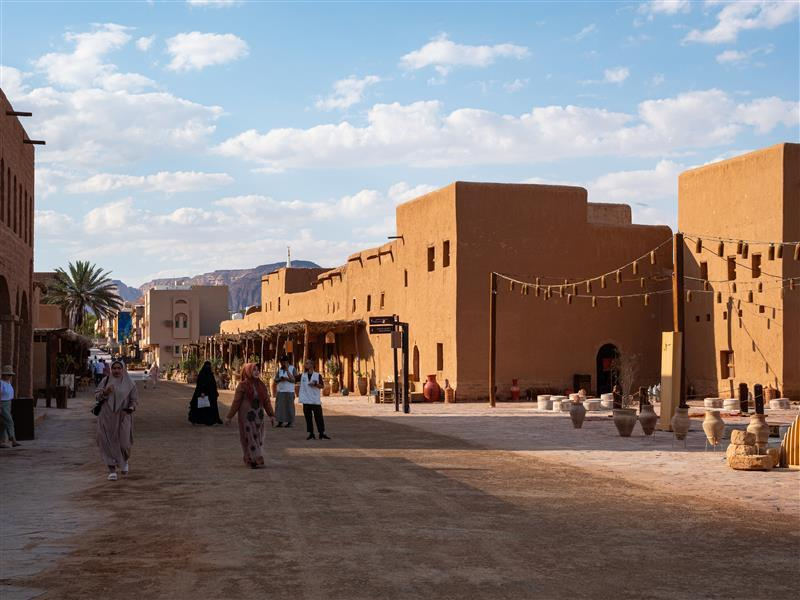
Saudi Arabia’s culture cannot be understood through one city, one historical period or one style of architecture.
In Riyadh and Diriyah, visitors encounter the political and architectural history of central Arabia. Jeddah’s historic centre reflects centuries of Red Sea trade and pilgrimage. AlUla connects ancient kingdoms, inscriptions and Nabataean heritage with an oasis that supported communities and travellers. Aseer’s mountain settlements express a different regional identity through stone architecture, food, decorative art and highland traditions. Hail, Al-Ahsa, Najran and other regions add rock art, agricultural landscapes, archaeological remains, markets and local customs shaped by their own environments.
Cultural travel in Saudi Arabia therefore means more than visiting monuments. It can include walking through a living historic district, understanding the relationship between architecture and climate, listening to the story behind a traditional craft, eating a regional dish or recognising how pilgrimage, trade and migration influenced a city.
Saudi Arabia currently has eight UNESCO World Heritage properties: seven cultural sites and one natural property. Its recognised cultural heritage includes archaeological landscapes, historic settlements, rock art, oasis systems and living traditions such as Al-Qatt Al-Asiri wall decoration, Arabic coffee, falconry, calligraphy and weaving practices.
This guide will help you decide which cultural regions match your interests, how long to allow, when a guide is useful and how to explore heritage sites and communities respectfully.
What This Guide Covers
This guide will help you understand:
The main types of cultural experiences available across Saudi Arabia.
How Saudi heritage differs between regions.
Which destinations suit archaeology, architecture, museums, crafts and living traditions.
How UNESCO sites fit into a broader cultural trip.
How many days to allow for a city, regional or multi-destination journey.
When guided visits are useful or required.
How weather, distances and transport affect cultural itineraries.
What to know about clothing, photography and visitor etiquette.
How to explore archaeological sites, villages and historic neighbourhoods responsibly.
Which parts of Saudi culture may appeal to different types of travellers.
Cultural Travel in Saudi Arabia at a Glance
Planning question | Practical guidance |
What does a cultural trip include? | Archaeological sites, historic districts, museums, heritage villages, souqs, architecture, food, crafts and living traditions |
Which destinations are useful for a first trip? | Riyadh and Diriyah, Jeddah, AlUla, Aseer, Hail and Al-Ahsa each provide a different cultural perspective |
How long do you need? | Two or three days can introduce one city; five to seven days allows a focused regional trip; a multi-region journey needs longer |
When should you travel? | Cooler months are generally comfortable for central and northern outdoor sites; regional conditions differ |
Is a guide necessary? | Not everywhere, but guides can add considerable value at archaeological sites, inscription areas and complex historic landscapes |
Should you book ahead? | Managed heritage sites, guided tours, events and limited-capacity experiences often require advance planning |
How will you travel? | Major cities may support taxis and public transport, while remote heritage areas often require a car, driver or organised transfer |
Who will enjoy it? | First-time visitors, couples, families, photographers, independent travellers and people interested in history, architecture, food or local life |
What Cultural Travel Means in Saudi Arabia
Saudi heritage includes both physical places and living practices.
The physical side includes archaeological sites, traditional buildings, historic districts, forts, palaces, inscriptions, rock art and objects preserved in museums. Living heritage includes skills, knowledge, oral traditions, social customs, performance, food, dress, crafts and forms of hospitality passed between generations.
The Saudi Heritage Commission organises its work across archaeology, urban heritage, handicrafts and intangible heritage. It also maintains national registers and visitor centres intended to interpret cultural locations and archaeological material for the public.
For travellers, this means cultural understanding does not end at the entrance to a museum. It also appears in the shape of a house, the layout of a market, the ingredients in a regional meal, the design of a coffee pot or the way a community uses a historic neighbourhood today.
A responsible cultural itinerary should make space for both. Visit major sites, but also allow time to observe how contemporary Saudi life continues around them.
Why Saudi Culture Changes from Region to Region
Saudi Arabia covers a large and geographically varied area. Communities developed around different environments, including central plateaus, western ports, desert trade routes, mountain terraces, oases and northern rock formations.
These landscapes influenced building materials, food, occupations and patterns of movement. Mudbrick architecture became strongly associated with parts of Najd in central Arabia. Red Sea coastal cities developed coral-stone buildings and wooden ventilation screens suited to maritime trade and humid conditions. Mountain communities in Aseer used stone, mud and decorative interiors in forms adapted to highland terrain. Oasis communities organised life around springs, canals, gardens and agricultural production.
Trade and pilgrimage also shaped regional identity. Historic Jeddah became a major port and gateway for Muslim pilgrims travelling towards Makkah, while AlUla and Hegra developed along ancient routes linking Arabia with neighbouring regions.
The result is not one uniform “Saudi culture”, but a network of regional identities connected through shared language, religion, history and social customs.
The Main Cultural Experiences in Saudi Arabia
UNESCO World Heritage sites
UNESCO properties provide a useful starting point because they introduce several major themes in Saudi history.
The cultural properties currently inscribed are:
Hegra Archaeological Site in AlUla.
At-Turaif District in Diriyah.
Historic Jeddah, the Gate to Makkah.
Rock Art in the Hail Region.
Al-Ahsa Oasis.
Hima Cultural Area.
The Cultural Landscape of Al-Faw Archaeological Area.
Each requires a different kind of visit. Hegra is a protected archaeological landscape. Historic Jeddah remains part of an active city. Al-Ahsa combines settlement history with an agricultural oasis system. Hail and Hima preserve evidence through rock art and inscriptions. Al-Faw represents a major archaeological landscape whose current visitor access should be checked before planning a journey around it.
A future Saudi Arabia UNESCO World Heritage Sites Guide can provide detailed comparisons. For a first cultural itinerary, choose one or two properties that fit naturally within your route rather than trying to visit all of them in one trip.
Archaeological sites and inscriptions
Saudi Arabia’s archaeological record covers many periods and communities. Visitors can encounter monumental tombs, settlement remains, ancient roads, inscriptions and rock carvings.
Hegra preserves the largest substantial Nabataean site south of Petra, including monumental tombs and inscriptions. Nearby Dadan and Jabal Ikmah reflect other ancient kingdoms and written traditions within the wider AlUla landscape.
In Hail, the rock-art areas of Jubbah and Shuwaymis contain human and animal representations developed across thousands of years. Their significance lies not only in individual images, but in the record they provide of changing environments and human life.
These locations benefit from interpretation. Without context, a visitor may see only carved stone. A guide, visitor centre or reliable museum introduction can explain chronology, scripts, environmental change and the communities connected with the site.
Historic cities and neighbourhoods
Historic urban areas show how communities lived, traded, worshipped and responded to local climates.
At-Turaif in Diriyah was the first capital of the Saudi dynasty and is recognised for its Najdi mudbrick architecture. Today, visits are managed as part of the wider Diriyah heritage destination, and current passes, tours and access arrangements should be checked before arrival.
Historic Jeddah, commonly known as Al-Balad, developed through Red Sea commerce and pilgrimage. Its urban character includes tower houses, wooden roshan screens, mosques, markets and small public spaces. It remains a living district rather than an open-air museum, so visitors should expect homes, businesses, worship and daily activity alongside restored buildings.
Old neighbourhoods are often most rewarding when explored slowly. Look beyond the most photographed façade and notice street width, ventilation, building materials, shopfronts and how public and private spaces are separated.
Heritage villages and regional architecture
Traditional villages can reveal how people adapted to mountains, heat, agriculture, defence and access to water.
Rijal Almaa in Aseer is known for multi-storey stone buildings within a steep mountain setting. Other Aseer settlements, along with traditional architecture in Al-Baha, Najran, Hail and central Saudi Arabia, display different combinations of stone, mud, wood and painted decoration.
These places should not be treated as empty sets created for visitors. Some remain connected to residents, family histories, farms and private buildings.
Aseer is also associated with Al-Qatt Al-Asiri, a decorative wall-painting tradition historically practised by women inside homes. UNESCO recognises the practice as intangible cultural heritage, reflecting the importance of artistic knowledge passed through families and communities.
Travellers considering the southwest can use the complete guide to Aseer and Abha to understand distances between Abha, mountain villages and regional attractions before building a heritage route.
Museums and cultural institutions
Museums help international visitors establish a timeline before visiting archaeological or historic sites.
The National Museum in Riyadh presents Saudi Arabia’s history through galleries and thousands of archaeological and cultural objects. It is particularly useful at the beginning of a first trip because it connects geology, early human settlement, ancient trade, Islam and the formation of the modern state.
Current opening times, exhibitions and entry arrangements should be checked through the official museum platform.
Regional museums, visitor centres and private collections may focus on local architecture, farming, crafts, clothing or family history. Their quality, interpretation language and accessibility vary, so verify current information before making a long journey.
Museums are also useful during hot afternoons, rainy mountain days or gaps between fixed reservations.
Souqs and traditional markets
A souq is a traditional market. Saudi souqs may sell spices, perfumes, textiles, household goods, antiques, jewellery, crafts, dates and regional food.
Some markets are deeply integrated into daily life, while others have become heritage or visitor districts. In both cases, the experience is about more than shopping. Markets show how products move between regions and how scents, materials, food and social interaction form part of cultural identity.
Souq Al Zal in Riyadh, markets within Historic Jeddah and regional markets in Aseer, Al-Ahsa, Hail and other areas each have a different character. Operating days and the type of merchandise can change, so check locally before travelling specifically for one market.
Ask before taking close photographs of sellers or customers. Bargaining may occur in some traditional markets, but not every price or shop is open to negotiation.
Crafts and living traditions
Saudi crafts include weaving, embroidery, metalwork, palm products, pottery, woodwork, leatherwork and decorative arts. Techniques differ by region and by the materials historically available there.
UNESCO’s Saudi intangible-heritage entries include traditions connected with Al-Sadu weaving, Bisht-making, Arabic calligraphy, falconry, Arabic coffee, date-palm knowledge and Al-Qatt Al-Asiri. The list demonstrates how cultural heritage includes skills and social practices, not only old buildings.
When purchasing crafts, look for information about where an item was made and who produced it. A product sold in a heritage district is not automatically locally handmade.
Workshops and demonstrations can be valuable when they are led by practitioners who explain the materials, process and cultural context rather than presenting the craft only as entertainment.
Food, coffee and hospitality
Food provides an accessible introduction to regional culture.
Rice and meat dishes may be shared across much of the country, but ingredients, breads, cooking methods and accompaniments differ by region. Aseer has grain-based dishes, mountain honey and distinctive breads. Al-Ahsa is closely associated with dates and oasis agriculture. Jeddah’s food reflects Red Sea trade and a long cosmopolitan history.
Saudi coffee is often served with dates and carries social meaning connected with welcome and hospitality. Visitors do not need to imitate every custom perfectly, but observing how coffee is poured, offered and received can help them understand the setting.
A culturally focused food itinerary should include local restaurants and markets as well as formal dining. Ask what is regional, how a dish is normally eaten and whether portions are intended for sharing.
Contemporary art and cultural programming
Saudi cultural travel is not limited to the past.
Riyadh, Jeddah, AlUla and other cities host exhibitions, design programmes, public art, performances and festivals. Cultural districts such as AlJadidah in AlUla also connect heritage landscapes with contemporary creative work.
Schedules change frequently. Confirm current exhibitions, event dates, ticket requirements and age restrictions through the organiser shortly before travelling.
Temporary programming should complement the core itinerary rather than determine the entire trip unless the event is your main reason for visiting.
Where to Experience Saudi Culture
Riyadh and Diriyah: national history and Najdi heritage
Riyadh is a useful starting point for travellers who want historical context, museums and central Arabian culture.
The National Museum can provide an overview before a visit to Diriyah. At-Turaif then adds a physical understanding of Najdi architecture and early Saudi history. Markets, modern cultural institutions and older parts of the capital show how Riyadh developed beyond its historic core.
Riyadh suits first-time visitors who prefer major-city services and want to combine heritage with contemporary culture.
Jeddah: Red Sea architecture and pilgrimage history
Historic Jeddah is particularly valuable for understanding the relationship between the Red Sea, international trade and pilgrimage.
The district’s coral-stone houses and wooden screens reflect local climatic needs as well as influences that travelled through maritime networks. Its history also shows how pilgrims and merchants from Africa, Asia and the Middle East contributed to the city’s identity.
Jeddah suits travellers interested in architecture, urban history, food and living neighbourhoods.
AlUla: ancient kingdoms and an oasis landscape
AlUla brings together Hegra, Dadan, Jabal Ikmah, Old Town, the oasis and contemporary cultural development.
The destination is geographically dispersed, and major archaeological visits may use managed tours or designated transport. Travellers should reserve important experiences before finalising meals and other activities.
Our guide to planning a visit to AlUla explains how the principal heritage areas differ and how many days a first trip may require.
Aseer and Abha: mountain culture and regional identity
Aseer offers architecture, markets, crafts, food and villages shaped by highland conditions and regional history.
Abha is a practical base, but important settlements and mountain areas lie beyond the city. Road conditions, fog and travel time should be included in the itinerary. Al-Qatt Al-Asiri and regional building styles provide a strong introduction to Aseer’s artistic identity.
This region suits travellers who want culture connected with mountain landscapes, local food and slower road travel.
Hail: rock art and northern heritage
Hail is a good choice for visitors interested in desert archaeology, inscriptions and historic travel routes.
The UNESCO rock-art property includes Jubbah and Shuwaymis, two separate landscapes rather than one compact attraction. Current access, guiding arrangements and road conditions should be verified before setting out.
Hail can be combined with forts, museums, markets and desert experiences, but remote heritage locations require realistic travel planning.
Al-Ahsa: oasis culture and agricultural heritage
Al-Ahsa is one of the world’s largest cultural-oasis landscapes and includes gardens, springs, canals, wells, settlements and historic buildings. Its significance comes from the relationship between water management, agriculture and continuous human settlement.
The area suits travellers interested in food, dates, farming, markets and cultural landscapes rather than isolated monuments.
Najran, Hima and Al-Faw: southern archaeology
The south contains important archaeological and inscription landscapes.
Hima Cultural Area preserves rock art and inscriptions along ancient travel routes, while Al-Faw represents an extensive archaeological cultural landscape. Visitor access, facilities and formal tour availability may be more limited or changeable than at established destinations such as Diriyah or AlUla. Confirm current conditions with official heritage authorities before organising transport.
These areas suit experienced independent travellers or visitors using knowledgeable local support.
How to Choose the Right Cultural Destination
Your main interest | Destinations to consider | Planning priority |
Ancient archaeology | AlUla, Hima and Al-Faw | Confirm access and consider a guide |
Historic city life | Jeddah, Riyadh and Diriyah | Stay close to the district and allow time to walk |
Rock art and inscriptions | Hail, Hima and Jabal Ikmah | Protect the sites and use interpretation where available |
Mountain villages and crafts | Aseer and Al-Baha | Plan road travel and changing weather |
Oasis culture and agriculture | Al-Ahsa and AlUla | Combine heritage sites with farms, markets and walking areas |
Museums and national history | Riyadh and major regional cities | Check current exhibitions and opening schedules |
Food and markets | Jeddah, Aseer, Al-Ahsa, Riyadh and Hail | Visit a market and try regionally specific dishes |
Contemporary art with heritage | AlUla, Riyadh and Jeddah | Check the current cultural calendar |
Choose according to the type of story you want to understand rather than the number of attractions listed online.
How Many Days Do You Need for a Cultural Trip?
One or two days
A short stay can introduce one city or one major heritage area. In Riyadh, that might mean a museum and Diriyah. In Jeddah, it could focus on Al-Balad and a museum or food experience.
Avoid crossing a large city repeatedly to collect unrelated attractions.
Three to five days
This allows a more complete regional visit. You can combine museums, historic areas, markets and one excursion while keeping enough time for meals and unplanned discoveries.
Three or more days are particularly useful in AlUla or Aseer, where cultural sites are spread across a wider landscape.
Seven to ten days
A longer trip can connect two regions with a clear theme, such as Riyadh and AlUla for national and ancient history, or Jeddah and Aseer for Red Sea and mountain cultures.
Domestic distances are substantial. A seven-day trip should not attempt to cover every major heritage region.
Two weeks or longer
A slower itinerary can connect several cultural landscapes while including rest and transport days. It is more suitable for travellers interested in road trips, detailed photography or archaeological depth.
Guided or Independent Cultural Travel?
Many museums, souqs and urban districts can be explored independently.
A guide is especially useful when:
The site contains inscriptions or archaeological layers that are difficult to interpret.
Access is managed through an organised tour.
The destination is remote or transport is complicated.
You want to understand architecture, local history or religious context.
The site has limited English interpretation.
You are visiting an active community and want to avoid accidental intrusion.
The visit includes protected, fragile or restricted areas.
At major destinations, check whether the guide is included with the ticket or must be booked separately. For remote journeys, confirm transport, language, duration and what happens if weather or access changes.
A cheaper unqualified tour is not necessarily better value if it provides inaccurate information or ignores site rules.
Combining Cultural and Outdoor Travel
Many Saudi heritage sites are inseparable from their landscapes.
Hegra’s tombs sit within sandstone formations. Hail’s rock art records changing desert environments. Aseer’s villages respond to steep mountains and agricultural terraces. Al-Ahsa’s heritage depends on water and oasis cultivation.
Travellers who want to combine archaeology, hiking, desert landscapes or mountain journeys can consult our guide to adventure travel in Saudi Arabia before choosing routes, providers and seasonal activities.
Physical ability also matters. Uneven ground, heat, elevation and long walks can affect visits that are marketed primarily as cultural rather than active experiences.
When to Plan a Cultural Trip
The best season depends on the region.
Central and northern archaeological locations are usually easier to explore during the cooler part of the year, when long periods outdoors are more manageable. Jeddah and Al-Ahsa can remain warm or humid, while Aseer’s higher areas follow a different climate pattern and attract visitors during summer.
Weather is not the only consideration. Events, school holidays, religious periods and seasonal programmes can affect accommodation availability, traffic and opening schedules.
During Ramadan, opening hours and dining patterns may change, particularly during the day and evening. Major holidays can also increase demand in some destinations.
Keep seasonal principles separate from current details: choose the general period first, then verify the specific site schedule shortly before travel.
Practical Planning for International Visitors
Build the itinerary geographically
Saudi destinations are often farther apart than first-time visitors expect. Group museums, markets and historic districts by location.
Do not assume that two attractions described as “in Riyadh” or “in Aseer” are close enough for a quick transfer.
Check access before travelling
Archaeological sites may require reservations, guided access or designated transport. Historic buildings can close for restoration, events or prayer periods.
Check the official attraction or destination page again within a few days of your visit.
Download essential information
Mobile coverage may be weaker at remote archaeological and village locations. Save tickets, maps, hotel details and the Arabic name of the destination before leaving the city.
Consider language support
English is common in major visitor destinations, hotels and large museums, but interpretation quality varies.
Learning a few Arabic greetings can make everyday exchanges easier. For detailed archaeology or local history, an English-speaking guide may significantly improve the experience.
Review accessibility directly
Historic districts may contain uneven surfaces, steps, narrow lanes and limited vehicle access. Archaeological landscapes can involve gravel, sand or long walking distances.
Contact the site or tour operator when wheelchair access, reduced walking, seating or accessible transport is essential.
Dress for both culture and climate
Saudi public-decorum guidance requires modest clothing in public places. Loose clothing that covers the shoulders and knees is a practical starting point, while religious sites or formal settings may apply additional expectations.
Choose comfortable shoes for stone, gravel and uneven streets. Carry sun protection and a light layer when visiting exposed desert or mountain locations.
Cultural and Community Etiquette
Ask before photographing people
Do not assume that market sellers, residents, craftspeople or families want to appear in photographs.
A wide street scene is different from pointing a camera into a shop, home or private gathering. Ask permission where an individual is clearly identifiable.
Follow site-specific photography rules
Museums, exhibitions, religious spaces and archaeological sites may restrict flash, tripods, drones or photography in selected areas. Follow signs and staff instructions.
Respect prayer and religious spaces
Mosques are active places of worship. Confirm whether non-Muslim visitors are permitted, dress appropriately and avoid entering during prayer unless the site provides visitor guidance.
Access to Makkah is restricted to Muslims. Travellers should verify regulations before building any religious-heritage itinerary.
Treat homes and villages as private spaces
Do not enter a doorway, courtyard, rooftop or abandoned-looking building unless access is clearly permitted.
Some historic structures remain privately owned or unsafe, even when they appear open.
Receive hospitality politely
Visitors may be offered coffee, dates or food. A polite acceptance is often appreciated, but you can decline respectfully when necessary.
Observe your host and avoid turning personal hospitality into an extended photography session.
Responsible Heritage Travel
Heritage sites are vulnerable to touching, climbing, carving, littering and unauthorised vehicle access.
Never trace an inscription, move a stone, collect an object or climb onto a protected structure for a photograph. Rock art and archaeological material can be permanently damaged by small actions.
Stay on marked routes and follow ranger or guide instructions. At natural and archaeological landscapes, carry waste out and avoid disturbing plants or animals.
Support cultural continuity by purchasing thoughtfully from craftspeople, local food producers and community businesses. Ask questions about origin and technique rather than choosing an item only because it looks traditional.
Cultural travel is most responsible when local people remain more important than the photograph, object or story the visitor wants to take away.
Cultural Travel for Different Types of Travellers
First-time international visitors
Begin with Riyadh and Diriyah, Jeddah or AlUla. These destinations provide established visitor services and clear cultural themes.
Couples
Combine one structured heritage visit with a market, restaurant or evening walk. Avoid filling every hour with guided tours.
Families
Choose museums, interactive visitor centres, short historic walks and destinations with toilets, shade and easy transport. Check whether archaeological tours have age restrictions or long transfer periods.
Independent travellers
You can plan much of the journey yourself, but controlled sites and remote areas may still require an organised visit.
History and archaeology enthusiasts
Allow extra time for museums and interpretation before visiting remote sites. AlUla, Hail, Hima and Al-Faw may be particularly relevant, subject to current access.
Photographers
Build flexibility around weather, light and local permission. Historic neighbourhoods should not be reduced to façades; photograph respectfully and remain aware of residents.
Food-focused travellers
Use markets, regional restaurants and food traditions to understand agriculture, migration and hospitality. Research local dishes before arriving rather than ordering only familiar international food.
Slow travellers
Choose one region and stay longer. Cultural understanding usually improves when you revisit a market, spend time in cafés and leave space for conversations.
Frequently Asked Questions
Is Saudi Arabia a good destination for cultural travel?
Yes. Saudi Arabia offers archaeological sites, historic cities, museums, traditional architecture, crafts, food cultures and living traditions across several distinct regions. Its UNESCO-listed heritage includes seven cultural World Heritage properties.
What are the main cultural destinations in Saudi Arabia?
Useful starting points include Riyadh and Diriyah, Historic Jeddah, AlUla, Aseer, Hail and Al-Ahsa. Najran, Hima, Al-Faw and other regional areas may suit travellers seeking more specialised archaeological journeys.
What is the most important UNESCO site to visit?
There is no single best choice. Hegra suits travellers interested in Nabataean archaeology, Historic Jeddah focuses on Red Sea urban heritage, At-Turaif represents Najdi and early Saudi history, and Al-Ahsa presents an oasis cultural landscape.
Is Hegra the same as AlUla?
No. AlUla is the wider destination. Hegra is one protected archaeological site within it. Other important areas include Dadan, Jabal Ikmah, Old Town and the oasis.
Do cultural attractions need to be booked in advance?
Some do. Managed archaeological sites, guided tours, events and limited-capacity experiences may require reservations. Markets and public historic districts are often more flexible, but opening and access conditions should still be checked.
Do I need a guide?
Not for every museum, market or historic district. A guide is valuable at inscription sites, archaeological landscapes, remote locations and places where English interpretation is limited.
Can cultural sites be visited independently?
Many can. However, independent planning does not guarantee unrestricted access. Some heritage locations require designated transport, authorised tours or supervised entry.
What should visitors wear?
Wear modest clothing appropriate to the setting and weather. Loose garments covering the shoulders and knees are practical in most public places. Religious sites may have additional requirements.
Can I photograph heritage sites and local people?
Landscape and architectural photography is generally common, but site-specific restrictions apply. Ask permission before photographing individuals and follow museum, religious-site and archaeological instructions.
Are Saudi heritage villages still inhabited?
Some are active communities, some are partly restored visitor areas and others contain a mixture of private homes, museums and heritage buildings. Treat every village as a real place rather than assuming it is entirely open to tourists.
What is the best season for cultural travel?
Cooler months are generally more comfortable for outdoor archaeological sites in central and northern Saudi Arabia. Regional conditions differ, especially in Jeddah, Al-Ahsa and the Aseer highlands.
How many days are needed for a cultural trip?
Two or three days can introduce one city. Five to seven days allows a focused regional journey, while a multi-region trip is more realistic over ten days or longer.
Conclusion
A successful cultural trip to Saudi Arabia begins by choosing a theme rather than collecting the greatest possible number of attractions.
Decide whether you are most interested in ancient archaeology, historic city life, regional architecture, crafts, museums, food or living traditions. Then select one or two destinations that tell that story clearly.
For a first trip, pair a well-interpreted site—such as a museum, UNESCO property or guided archaeological visit—with time in a market, neighbourhood or restaurant where culture continues as part of everyday life.
Once you have chosen the region, confirm current access, reserve any managed heritage visits and organise transport before adding smaller stops around them.
References
Saudi Arabia: Properties Inscribed on the World Heritage List — UNESCO World Heritage Centrehttps://whc.unesco.org/en/statesparties/saAccessed 22 July 2026.
Saudi Arabia: Intangible Cultural Heritage — UNESCOhttps://ich.unesco.org/en/state/saudi-arabia-SAAccessed 22 July 2026.
Cultural Heritage — Saudi Heritage Commissionhttps://heritage.moc.gov.sa/en/Cultural-HeritageAccessed 22 July 2026.
Visitor Centers Directory — Saudi Heritage Commissionhttps://heritage.moc.gov.sa/en/Cultural-Heritage/Centers-DirectoryAccessed 22 July 2026.
At-Turaif District in ad-Dir’iyah — UNESCO World Heritage Centrehttps://whc.unesco.org/en/list/1329Accessed 22 July 2026.
Hegra Archaeological Site (al-Hijr / Madā’in Ṣāliḥ) — UNESCO World Heritage Centrehttps://whc.unesco.org/en/list/1293Accessed 22 July 2026.
Historic Jeddah, the Gate to Makkah — UNESCO World Heritage Centrehttps://whc.unesco.org/en/list/1361Accessed 22 July 2026.
Rock Art in the Hail Region of Saudi Arabia — UNESCO World Heritage Centrehttps://whc.unesco.org/en/list/1472Accessed 22 July 2026.
Al-Ahsa Oasis, an Evolving Cultural Landscape — UNESCO World Heritage Centrehttps://whc.unesco.org/en/list/1563Accessed 22 July 2026.
Hima Cultural Area — UNESCO World Heritage Centrehttps://whc.unesco.org/en/list/1619Accessed 22 July 2026.
The Cultural Landscape of Al-Faw Archaeological Area — UNESCO World Heritage Centrehttps://whc.unesco.org/en/list/1712Accessed 22 July 2026.
Al-Qatt Al-Asiri, Female Traditional Interior Wall Decoration in Asir, Saudi Arabia — UNESCO Intangible Cultural Heritagehttps://ich.unesco.org/en/RL/al-qatt-al-asiri-female-traditional-interior-wall-decoration-in-asir-saudi-arabia-01261Accessed 22 July 2026.
National Museum — Museums Commission, Saudi Ministry of Culturehttps://museums.moc.gov.sa/en/museums/riyadh/national-museumAccessed 22 July 2026.
Diriyah Visitor Information — Diriyah Companyhttps://www.diriyah.sa/Accessed 22 July 2026.
Hegra — Experience AlUlahttps://www.experiencealula.com/en/places-to-go/hegraAccessed 22 July 2026.
Dadan and Jabal Ikmah — Experience AlUlahttps://www.experiencealula.com/en/places-to-go/dadanAccessed 22 July 2026.
About Aseer — Discover Aseerhttps://discoveraseer.com/en/aboutAccessed 22 July 2026.
Public Decorum Charter — Official Saudi eVisa Portalhttps://visa.visitsaudi.com/Home/PublicDecorumAccessed 22 July 2026.


Comments