Complete Guide to Jeddah, Saudi Arabia
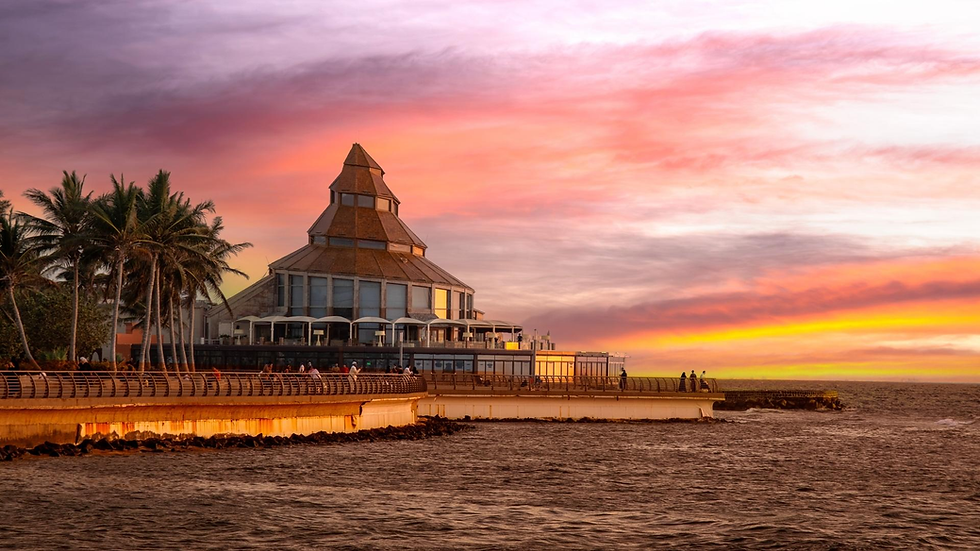
Jeddah is a Red Sea city with several distinct identities.
It is a historic port shaped by trade and pilgrimage, a modern coastal city stretching across a large urban area and a practical arrival point for travellers continuing towards Makkah, Madinah or other western Saudi destinations.
Its most recognisable areas are not located within one compact centre. Al-Balad, Jeddah’s UNESCO-listed historic district, sits within the older part of the city. The Corniche and waterfront extend along the coast. Northern districts lead towards Obhur and King Abdulaziz International Airport, while restaurants, museums, shopping areas and accommodation are distributed across many neighbourhoods.
That geography should shape your planning. Jeddah is best approached as a collection of districts rather than a city where every attraction can be reached on foot.
For most first-time visitors, three days provides a useful introduction: one day for Al-Balad and cultural attractions, one for the waterfront and contemporary city, and one flexible day for food, museums, a marine experience or a slower return to the areas you enjoyed most.
Jeddah at a Glance
Planning question | Practical guidance |
Where is Jeddah? | On Saudi Arabia’s western Red Sea coast |
What type of destination is it? | A major coastal city combining heritage, food, waterfronts, culture and urban entertainment |
Main historic area | Al-Balad, officially known as Historic Jeddah |
Main arrival point | King Abdulaziz International Airport |
Useful trip length | Two days for a focused stop; three or four days for a more balanced first visit |
Best broad travel period | Late autumn through early spring for more comfortable outdoor sightseeing |
Is a car necessary? | Not always, but taxis, ride-hailing or a car are useful because the city is spread out |
Can the city be explored on foot? | Individual districts can; the entire city cannot |
Is advance booking necessary? | Recommended for popular museums, guided tours, boat trips, marine activities and busy periods |
Who will enjoy Jeddah? | First-time visitors, couples, families, food travellers, heritage visitors and people interested in the Red Sea |
Understanding Jeddah
Jeddah developed as a port on the eastern shore of the Red Sea. Historic Jeddah became closely associated with maritime trade and with pilgrims arriving by sea before continuing towards Makkah.
UNESCO describes Historic Jeddah as a surviving example of the Red Sea’s architectural tradition. Its urban fabric includes coral-stone houses, mosques, markets, small public spaces and tall merchant homes with large wooden screens known as roshan or rawasheen. These screens provided privacy, shade and ventilation in the city’s hot, humid climate.
Modern Jeddah extends far beyond this historic core. Its coastal roads, residential districts, commercial centres, museums and public spaces cover a substantial area.
For planning purposes, think of the city in four broad sections:
Al-Balad and the older city, where the main heritage experience is concentrated.
The central Corniche and waterfront, associated with sea views, public art and King Fahd’s Fountain.
Northern Jeddah and Obhur, where newer waterfront areas and some marine activities are located.
The airport and surrounding northern districts, useful for short stays, early flights and onward rail travel.
The exact boundaries are less important than recognising that crossing between them can take time.
Why Visit Jeddah?
Jeddah offers a combination that is difficult to reduce to one category.
For heritage
Al-Balad provides an introduction to Red Sea architecture, pilgrimage history and urban trade. The district remains connected to residents, businesses, mosques and markets rather than functioning only as an enclosed heritage attraction.
For coastal city life
For food
Jeddah’s cuisine reflects the wider Hijaz region, Red Sea ingredients and the influence of communities connected through trade and pilgrimage.
For contemporary culture
Museums, galleries, design spaces, public art and temporary exhibitions add a modern cultural layer beyond the historic district.
For a first arrival in western Saudi Arabia
King Abdulaziz International Airport and the Haramain High-Speed Railway make Jeddah an important transport point for wider western itineraries. The airport has direct access to the railway, as well as car-rental and on-demand transport services.
Main Areas to Understand Before Visiting
Al-Balad: Historic Jeddah
Al-Balad is the cultural centre of a first Jeddah visit.
The UNESCO World Heritage property reflects the city’s history as a Red Sea trading port and gateway for Muslim pilgrims. Its tower houses, markets, mosques and narrow streets were influenced by building methods and ideas exchanged across the Red Sea and Indian Ocean trading networks.
The official Jeddah Historic District programme describes an area of approximately 2.5 square kilometres containing hundreds of historic buildings, several traditional markets and more than 30 historic mosques. Conservation and revitalisation work continues, so routes, building access and individual visitor experiences may change.
What to notice in Al-Balad
Look beyond individual landmarks and pay attention to:
Coral-stone construction.
Wooden roshan windows.
The relationship between ground-floor shops and upper residential spaces.
Narrow streets designed around shade and airflow.
Mosques integrated into the urban fabric.
Traditional markets and contemporary small businesses.
Restored houses alongside buildings undergoing conservation.
Al-Balad is covered more broadly within our guide to cultural travel in Saudi Arabia, which explains how historic districts should be approached as living communities rather than static displays.
Guided or independent visit?
Independent exploration works well when you want to browse markets, photograph architecture and follow your own pace.
A knowledgeable guide is useful when you want to understand:
The function of roshan screens.
The history of specific merchant houses.
Jeddah’s role in pilgrimage and trade.
The relationship between different neighbourhoods and markets.
Which restored interiors are currently accessible.
English-language interpretation varies, and some buildings operate according to temporary exhibitions or conservation schedules. Verify access shortly before your visit.
Practical advice for Al-Balad
Wear comfortable shoes and expect uneven surfaces, kerbs and narrow passages. Begin earlier in the day during cooler months or later in the afternoon when conditions are more comfortable.
Do not assume every historic doorway is open to visitors. Some properties remain private, under restoration or accessible only during organised programmes.
The Jeddah Corniche and Waterfront
The Corniche refers to the coastal road and public spaces extending along Jeddah’s Red Sea shoreline.
Different sections provide promenades, landscaped areas, sea views, public art, cafés and family spaces. The official destination platform identifies the waterfront as one of Jeddah’s principal visitor areas.
A waterfront visit is most enjoyable when treated as a relaxed part of the day rather than a rapid attraction stop.
Possible ways to experience it include:
An early-morning walk.
A sunset visit.
A meal near the coast.
Exploring public sculpture and landscaped areas.
Combining the waterfront with a nearby museum or aquarium.
Watching King Fahd’s Fountain from an appropriate viewing point.
King Fahd’s Fountain
King Fahd’s Fountain is one of Jeddah’s best-known coastal landmarks. It sends seawater high above the Red Sea and is generally most noticeable after dark when illuminated. Operating visibility can be affected by maintenance and weather, so avoid planning an entire evening around an assumed schedule without checking current local information.
Public waterfront versus beach access
A public promenade is not automatically a swimming beach.
Some coastal areas are intended mainly for walking and views, while swimming, snorkelling or private beach access may operate through resorts, beach clubs, marinas or organised providers.
Confirm:
Whether swimming is permitted.
Entry and reservation requirements.
Family or age policies.
Changing facilities.
Equipment rental.
Food and drink rules.
Cancellation conditions.
Current water and weather conditions.
A planned Jeddah beaches guide will cover individual access options in greater detail.
Northern Jeddah and Obhur
Northern Jeddah has a different character from Al-Balad.
It includes newer residential and commercial areas, waterfront developments and access points associated with marinas, boat trips and selected beach experiences. Obhur is a broad coastal area rather than one single attraction.
This part of the city may suit travellers who prioritise:
Marine activities.
Newer waterfront environments.
Proximity to the airport.
Resort or beach-club access.
Longer, slower stays centred on the coast.
It is farther from Al-Balad, so visitors should not assume that a northern waterfront hotel is automatically convenient for heritage sightseeing.
Central Jeddah
Central districts can provide a practical balance between the historic south, the Corniche and northern areas.
This may suit travellers who want:
A wider choice of accommodation and restaurants.
Reasonable access to several parts of the city.
Museums and shopping.
Fewer very long journeys in one direction.
The right neighbourhood depends on your actual itinerary. Map your three highest-priority experiences before selecting accommodation.
Main Things to Do in Jeddah
Explore Al-Balad Slowly
Al-Balad deserves at least half a day, and travellers interested in architecture, food or photography may prefer longer.
Rather than trying to enter every named house, combine:
One guided or well-researched heritage walk.
Time in a traditional market.
A regional meal or snack.
One accessible museum or restored building.
Unstructured time to observe street life and architecture.
A dedicated Al-Balad visitor guide is planned for detailed routes, buildings and current access.
Walk Along the Red Sea
Jeddah’s coastline is part of the city’s everyday identity.
Choose one waterfront area and spend time there rather than attempting to cover the full length of the Corniche. The experience is often better in the early morning or evening, particularly in warmer months.
Try a Red Sea Experience
Jeddah can serve as a base for boat trips, diving, snorkelling and other marine activities.
The exact departure point, trip format and season depend on the provider. Before booking, confirm:
Operator credentials.
Guide or instructor qualifications.
Equipment included.
Minimum age or swimming ability.
Transfer arrangements.
Medical or certification requirements.
Insurance.
Cancellation and weather policies.
Marine activities should not be selected only by price. Our guide to adventure travel in Saudi Arabia explains how to assess guided activities, personal ability and provider quality.
Visit a Museum or Cultural Space
Jeddah’s official city guides identify a mixture of heritage museums, contemporary art spaces and family attractions. Current options may include cultural institutions such as Hayy Jameel, Al Tayebat and the House of Islamic Arts, alongside changing exhibitions and seasonal programmes.
Operating status, ticketing and opening hours should be verified directly. A museum listed in an older itinerary may be undergoing renovation, hosting a temporary exhibition or operating on different hours during Ramadan.
Fakieh Aquarium is another established visitor attraction associated with marine life and family visits, but current admission, show schedules and facilities should be checked through its official or Visit Saudi listing.
Explore Markets and Shopping Areas
Traditional markets in Al-Balad offer a different experience from Jeddah’s modern shopping centres.
In historic markets, visitors may find perfumes, spices, textiles, jewellery, household goods, food and imported products reflecting the city’s trading history. Modern malls provide air-conditioned spaces, international brands, dining and family entertainment.
Bargaining may occur in some traditional shops, but not every price is negotiable. Ask politely rather than assuming.
Eat Your Way Through the City
Jeddah is one of Saudi Arabia’s most varied food cities.
Its food reflects Hijazi traditions, Red Sea seafood and the influence of communities connected through trade and pilgrimage. Regional dishes visitors may encounter include saleeg, a soft rice dish, and masoub, a bread-based dish commonly served with banana, honey, cream or other toppings.
Seafood, rice dishes, bakeries, traditional breakfasts and contemporary Saudi restaurants can all form part of the same trip.
Our guide to food travel in Saudi Arabia explains how Jeddah fits within the country’s wider regional food landscape.
A practical food plan could include:
One traditional Hijazi meal.
One seafood meal.
Breakfast at a local bakery or restaurant.
Coffee or dessert in a contemporary café.
One flexible meal based on a local recommendation.
Ask about portion sizes before ordering several shared dishes.
Is Jeddah Suitable for Families?
Yes. Jeddah can work well for families because it combines public waterfronts, indoor attractions, shopping, food and heritage.
The most comfortable family trips usually:
Stay near the main planned activities.
Avoid crossing the city several times each day.
Balance outdoor and indoor experiences.
Check stroller access in Al-Balad.
Confirm child policies for beaches, boats and marine activities.
Leave room for rest during the hottest part of the day.
Carry water and familiar snacks during longer transfers.
The Saudi Arabia family travel guide provides wider advice on accommodation, transport and activity planning with children.
When Is the Best Time to Visit Jeddah?
Jeddah has a warm coastal climate influenced by the Red Sea.
Late autumn to early spring
This is generally the easiest period for outdoor walking, Al-Balad exploration and longer waterfront visits. Daytime conditions can still feel warm, and humidity varies, but visitors are usually able to spend more time outside than during peak summer.
Spring
Spring can work well, particularly earlier in the season. Conditions become progressively warmer, so move outdoor activities towards the morning and evening.
Summer
Summer in Jeddah is hot and humid.
A summer visit remains possible when the itinerary prioritises:
Museums.
Shopping centres.
Aquariums and indoor attractions.
Restaurants.
Short evening waterfront walks.
Organised marine experiences with appropriate conditions.
Avoid planning extended exposed walks through Al-Balad or along the coast during the hottest part of the day.
Ramadan and major events
Ramadan changes dining hours, evening activity and the daily rhythm of the city. Al-Balad can become particularly active after sunset, but restaurants and attractions may follow adjusted schedules.
Large events, holidays and school breaks can also affect hotel availability and traffic. Confirm current programmes through official calendars shortly before travelling.
Check the National Center for Meteorology for current forecasts rather than relying only on historical climate averages.
How Many Days Do You Need in Jeddah?
One day
One day is enough only for a focused introduction.
Choose either:
Al-Balad and a traditional meal, or
The Corniche, a museum and an evening waterfront visit.
Trying to cover the historic district, northern coast and several museums in one day will create more driving than sightseeing.
Two days
Two days can cover the two defining sides of the city:
One day for Al-Balad and cultural heritage.
One day for the waterfront, food and a contemporary attraction.
Three or four days
Three or four days provides a more comfortable first visit.
It allows time for:
Al-Balad.
The Corniche.
A museum or gallery.
A marine or beach experience.
Regional food.
Flexible evenings.
Rest between distant districts.
Five days or longer
A longer stay suits travellers using Jeddah as a coastal base, visiting family, working remotely or combining several water activities with cultural exploration.
How to Get to Jeddah
By Air
King Abdulaziz International Airport is Jeddah’s main international and domestic gateway.
Search for flights using the airport code JED. Routes, terminals and airline operations can change, so confirm your terminal directly with the airline and airport before departure.
The airport provides:
Car-rental services.
On-demand transport.
Pick-up and drop-off areas.
Direct access to the Haramain High-Speed Railway.
Accessibility services coordinated with airlines.
Wi-Fi and passenger facilities.
Arrange your hotel transfer in advance when arriving late, travelling with children or carrying substantial luggage.
By Train
The Haramain High-Speed Railway connects cities in western Saudi Arabia and serves the Jeddah area, including direct airport access.
Train travel may be useful for visitors arriving from Madinah, King Abdullah Economic City or Makkah, subject to route eligibility and current schedules. Search the exact departure and arrival stations through Saudi Arabia Railways before booking.
Makkah is open only to Muslim visitors. International travellers should understand this restriction before booking accommodation, rail tickets or tours involving the city.
By Road
Jeddah can be reached by road from Makkah, Madinah, Taif and other Saudi cities.
Long-distance driving should be planned around rest, fuel and arrival time. Avoid beginning an unfamiliar road journey immediately after an overnight flight.
Getting Around Jeddah
Taxis and App-Based Car Services
Taxis and app-based transport are practical for visitors who do not want to drive.
They work particularly well when:
The stay is short.
Activities are grouped by district.
Parking would be inconvenient.
The traveller is unfamiliar with local roads.
Only one or two journeys are needed each day.
The cost can increase when crossing between Al-Balad, the northern waterfront and Obhur several times.
Jeddah Bus
Jeddah has a scheduled public-bus system. SAPTCO publishes current routes, operating information and application access through its official Jeddah Bus page. The current network includes accessible buses, but routes and hours should be checked for the exact day of travel.
Public transport may reduce some journeys, but it should not be assumed to serve every hotel, beach or attraction directly.
Rental Car
A rental car may suit travellers who:
Are staying in northern Jeddah.
Plan several coastal journeys.
Are travelling with family.
Want to continue by road.
Prefer independent movement.
Before booking, compare insurance, deposit requirements, parking, mileage, additional drivers and child-restraint availability.
Walking
Walking works within individual areas.
Al-Balad, selected waterfront sections and some commercial districts can be explored on foot. Walking between the city’s main districts is not realistic.
Where to Stay in Jeddah
The best area depends on what you plan to do most often.
Near Al-Balad or Central Jeddah
Suitable for:
Heritage-focused visitors.
Short cultural stays.
Travellers prioritising markets and older districts.
Visitors who do not need daily access to the northern coast.
Check hotel operating status, parking and late-evening transport.
Along the Corniche or Near the Waterfront
Suitable for:
Sea views and waterfront walks.
Couples.
Families.
Visitors wanting restaurants and coastal evenings.
A waterfront address can still be far from Al-Balad or Obhur. Check the exact location rather than relying on the word “Corniche” alone.
Northern Jeddah or Obhur
Suitable for:
Marine activities.
Beach access.
Longer stays.
Airport convenience.
Travellers prioritising the northern coast.
The main disadvantage is the distance from the historic city.
Near the Airport
Suitable for:
Overnight connections.
Late arrivals.
Early departures.
Short business stays.
It is less convenient for travellers spending most of their time in Al-Balad or along the central waterfront.
A future Where to Stay in Jeddah guide will compare neighbourhoods and accommodation types in greater detail.
Budget and Booking Considerations
The main cost categories in Jeddah are usually accommodation, local transport, food and any private coastal or marine experiences.
A lower-priced hotel may not provide better value when it requires several long taxi journeys every day. The budget travel guide to Saudi Arabia explains how to compare the combined cost of accommodation and transport.
Before booking, confirm:
Final hotel price and taxes.
Parking.
Breakfast.
Room occupancy.
Cancellation conditions.
Beach or pool access.
Airport-transfer arrangements.
Equipment and transport included in marine activities.
Museum and attraction admission.
Weather-related cancellation rules.
Avoid relying on prices found in old articles or screenshots.
Accessibility
Accessibility varies considerably across Jeddah.
King Abdulaziz International Airport provides designated accessibility zones and assistance services, although airline support should be requested in advance.
Modern malls, hotels and newer waterfront areas may provide step-free access, but individual facilities should still be confirmed.
Al-Balad can be more demanding because of:
Uneven paving.
Kerbs and steps.
Narrow streets.
Historic buildings without lifts.
Limited vehicle access in some areas.
Longer walking distances between rest points.
Travellers who need step-free routes, frequent seating or accessible toilets should consider an organised visit and discuss the route before arrival.
Practical Advice for International Visitors
Entry requirements
Visa eligibility depends on nationality and personal circumstances. The official Saudi eVisa portal publishes the current list of eligible nationalities and application conditions. Check the official portal before making non-refundable bookings.
Language
English is widely used in hotels, airports and major visitor attractions, but smaller markets and local restaurants may rely more heavily on Arabic.
Save the Arabic names of your hotel and destination for drivers. Jeddah is written جدة.
Dress
Saudi Arabia’s Public Decorum Charter requires modest clothing in public places. Clothing that covers the shoulders and knees is a practical approach, with more conservative dress appropriate around mosques and formal cultural settings.
Photography
Ask permission before photographing individuals, market sellers or private businesses at close range.
Follow restrictions inside museums, mosques and restored heritage houses. Do not use drones without confirming the applicable permissions.
Connectivity
Download hotel details, tickets and transport applications before leaving the airport.
Mobile service is generally useful throughout the city, but having an offline map can still help in Al-Balad’s narrow streets.
Cultural and Responsible Travel
Historic Jeddah remains a living urban environment.
Do not enter private homes, rooftops or courtyards simply because a door appears open. Avoid photographing residents through windows or treating daily religious and commercial activity as a performance.
\
Respect conservation work by:
Staying outside closed buildings.
Following barriers.
Not touching fragile architectural elements.
Avoiding graffiti or markings.
Using authorised entrances.
Disposing of waste properly.
At the coast:
Follow swimming and boating instructions.
Do not remove coral or marine life.
Avoid leaving plastic or food waste.
Choose operators that explain environmental and safety practices.
Do not stand on coral during snorkelling or diving.
Combining Jeddah With Another Destination
Jeddah can form the beginning or end of a wider Saudi itinerary, but the next destination should be chosen according to transport and available time.
AlUla
AlUla offers a contrasting experience centred on archaeology, desert landscapes and an oasis. Current flights and road options should be checked before booking. The complete guide to AlUla explains how many days the destination requires.
Aseer and Abha
Aseer provides mountain landscapes, villages and a regional road-trip experience. It should not be treated as a simple day trip from Jeddah. Our Aseer and Abha travel guide explains the transport and time required.
Makkah
Makkah is geographically close to Jeddah and connected by road and rail, but access is restricted to Muslim visitors. Confirm religious travel, permit and access requirements through official sources.
Frequently Asked Questions
Is Jeddah worth visiting?
Yes. Jeddah offers a combination of UNESCO-listed heritage, Red Sea waterfronts, regional food, contemporary culture and marine experiences. It is particularly useful for travellers beginning or ending a western Saudi itinerary.
How many days should I spend in Jeddah?
Two days covers the main heritage and waterfront experiences at a brisk pace. Three or four days provides more time for food, museums, marine activities and travel between districts.
What is Jeddah best known for?
Jeddah is known for Historic Jeddah or Al-Balad, its Red Sea coastline, King Fahd’s Fountain, Hijazi food and its historical role as a port and gateway for pilgrims travelling towards Makkah.
Is Al-Balad the same as Jeddah?
No. Al-Balad is Jeddah’s historic district. Modern Jeddah extends far beyond it along the Red Sea coast and into northern and inland neighbourhoods.
Can Jeddah be explored without a car?
Yes. Taxis, app-based transport and public buses can support a visit. The itinerary should be grouped by district to avoid excessive travel.
Is Jeddah walkable?
Individual areas such as Al-Balad and selected waterfront sections are walkable. The city as a whole is too spread out to explore entirely on foot.
What is the best time to visit Jeddah?
Late autumn through early spring generally provides more comfortable conditions for outdoor sightseeing. Summer trips are possible but should prioritise indoor attractions and shorter outdoor periods.
Is Jeddah suitable for families?
Yes. Families can combine waterfronts, museums, aquariums, shopping and heritage. Check stroller access, child policies and transport distances in advance.
Are Jeddah’s beaches public?
Access varies. Some areas are public waterfronts rather than swimming beaches, while other beaches operate through resorts, clubs or managed facilities. Confirm access rules before travelling.
Can visitors dive or snorkel in Jeddah?
Yes, organised Red Sea diving and snorkelling experiences are available. Choose a suitably qualified provider and confirm certification, equipment, transfers and weather policies.
Does Jeddah have public transport?
Yes. Jeddah Bus operates scheduled routes, but visitors should check the official map and application to confirm whether the network serves their accommodation and attractions.
Which airport serves Jeddah?
King Abdulaziz International Airport, airport code JED, is the city’s principal airport. It also provides direct access to the Haramain High-Speed Railway.
Can non-Muslims travel from Jeddah to Makkah?
Makkah is restricted to Muslim visitors. Non-Muslim travellers should not book transport or tours entering the city.
Is a guided tour necessary in Al-Balad?
No, but a knowledgeable guide can add valuable historical and architectural context and help identify buildings that are currently accessible.
What should visitors eat in Jeddah?
Try Hijazi dishes such as saleeg and masoub, along with Red Sea seafood, traditional breakfast dishes and Saudi coffee.
Where should first-time visitors stay?
Choose according to your priorities: central Jeddah for balanced access, the Corniche for waterfront evenings, northern Jeddah for marine activities or the airport area for a short connection.
Conclusion
A good Jeddah itinerary begins by choosing two priorities: heritage and coast.
Place Al-Balad on one day and the waterfront on another. Then use your remaining time for the part of the city that matches your interests—food, museums, contemporary art, family attractions or a managed Red Sea experience.
Only after deciding those priorities should you choose accommodation. Staying near the places you will actually visit will usually improve the trip more than selecting a hotel by price or sea view alone.
References
The Saudi Terminal Content Architecture — The Saudi TerminalProject workbook covering JED-001 production order, keyword ownership, content relationships and refresh requirements.Accessed 22 July 2026.
Discover Jeddah: Coastal Experiences and Top Attractions — Visit Saudihttps://www.visitsaudi.com/en/destinations/jeddahAccessed 22 July 2026.
Historic Jeddah, the Gate to Makkah — UNESCO World Heritage Centrehttps://whc.unesco.org/en/list/1361/Accessed 22 July 2026.
Visit Al-Balad — Jeddah Historic District Program, Saudi Ministry of Culturehttps://jeddahalbalad.sa/visit_al_baladAccessed 22 July 2026.
About Us — Jeddah Historic District Program, Saudi Ministry of Culturehttps://jeddahalbalad.sa/about-usAccessed 22 July 2026.
Jeddah City Guide 2024 — Visit Saudihttps://www.visitsaudi.com/content/dam/documents/en-new-jeddah-guide.pdfAccessed 22 July 2026.
Jeddah Waterfront — Visit Saudihttps://www.visitsaudi.com/en/jeddah/attractions/jeddah-waterfrontAccessed 22 July 2026.
King Fahd’s Fountain — Visit Saudihttps://www.visitsaudi.com/en/jeddah/attractions/visit-king-fahd-s-fountainAccessed 22 July 2026.
Fakieh Aquarium — Visit Saudihttps://www.visitsaudi.com/en/jeddah/attractions/explore-fakieh-aquariumAccessed 22 July 2026.
King Abdulaziz International Airport — Jeddah Airports Companyhttps://www.kaia.sa/Accessed 22 July 2026.
Parking and Transport — King Abdulaziz International Airporthttps://www.kaia.sa/Parking-and-TransportAccessed 22 July 2026.
Train Schedule — Saudi Arabia Railwayshttps://www.sar.com.sa/travel-information/trainschedule/Accessed 22 July 2026.
Jeddah Bus — Saudi Public Transport Companyhttps://saptco.com.sa/en/jeddah-busAccessed 22 July 2026.
Saudi eVisa — Official Saudi Tourist Visa Portalhttps://visa.visitsaudi.com/Accessed 22 July 2026.
Public Decorum Charter — Official Saudi Tourist Visa Portalhttps://visa.visitsaudi.com/Home/PublicDecorumAccessed 22 July 2026.
Makkah Visitor Information — Visit Saudihttps://www.visitsaudi.com/en/makkahAccessed 22 July 2026.
Weather and Forecasts — National Center for Meteorologyhttps://www.ncm.gov.sa/enAccessed 22 July 2026.


Comments